What happens during a deep sanitizing and disinfection visit
By Amara Whitfield · Updated 2026-05-14
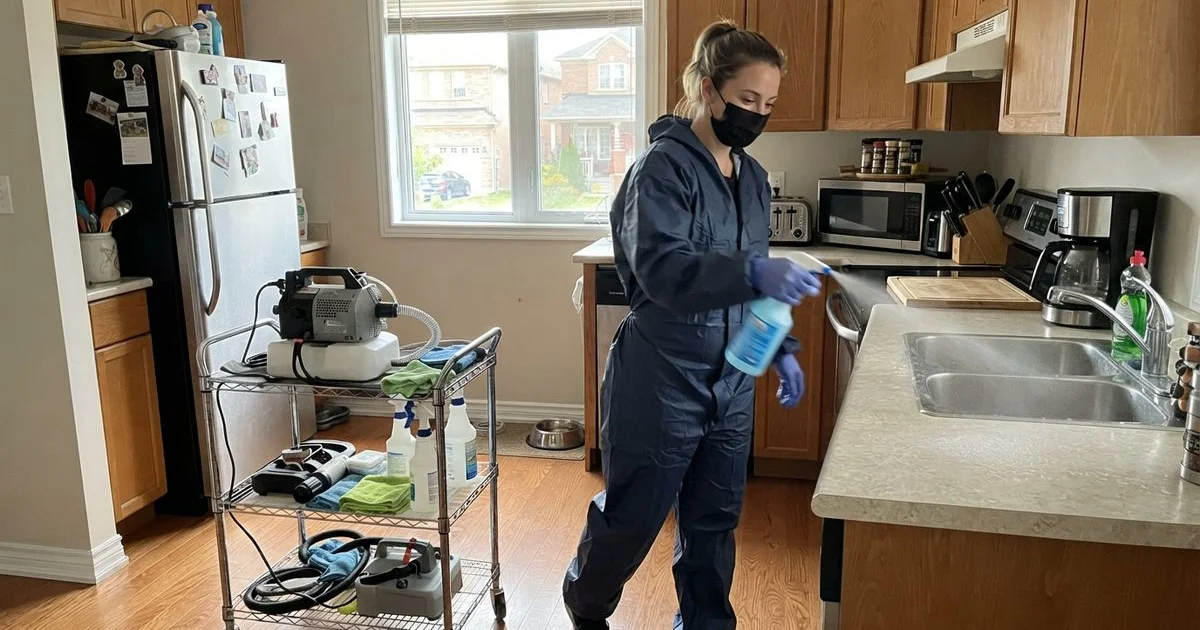
Deep sanitizing and disinfection is usually the last step in a cleanout, and it is easy to underestimate how much it actually involves. It is not a wipe-down. It is a structured process aimed at neutralizing odour, bacteria and contamination that ordinary cleaning leaves behind.
Before the crew arrives
A sanitizing visit almost always follows a physical cleanout, once floors, surfaces and airflow paths are clear. Trying to sanitize a space that is still full of boxes or furniture wastes product and misses the surfaces that actually carry odour or contamination, so most providers will not start this step until the space is emptied.
Before booking, it helps to know roughly what level of contamination you are dealing with: odour or dust only, mould or pest droppings, or bodily fluids and waste. The sanitizing cost estimator linked from the homepage uses that same scale, and being upfront about it with a provider avoids a surprised reaction, and a change in price, once the crew is on site.
What the visit typically looks like
Assessment. The crew walks the space to confirm contamination level and identify problem areas, things like flooring that has absorbed odour, walls near a pest issue, or surfaces that need extra attention.
Prep and containment. For anything beyond light odour, crews often seal off the work area to keep disinfectant fumes or airborne particles from spreading into the rest of the property.
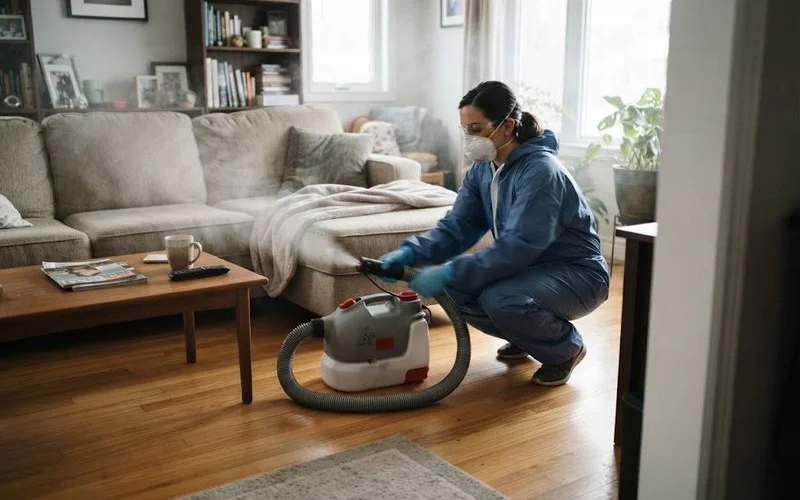
Treatment. This is where the actual work happens: hospital-grade disinfectants applied to surfaces, and for tougher odour or contamination, equipment like ozone generators, hydroxyl machines or thermal fogging to reach places a cloth cannot. Porous materials, carpet, upholstered furniture, unsealed wood, tend to hold odour longest and often need targeted attention beyond a general surface pass.
Dwell time. Most disinfectant products need time on the surface to actually work. A crew that sprays and wipes immediately is not doing the job properly; dwell time is part of what makes the treatment effective.
Ventilation and final check. The space airs out, and the crew does a final pass to confirm odour and visible residue are gone before calling the job complete.
| Contamination level | What triggers it | Typical scope |
|---|---|---|
| Light | Odour or dust only | Surface disinfecting, standard airing out |
| Moderate | Mould or pest droppings | Targeted treatment plus containment |
| Severe | Bodily fluids or waste present | Full containment, PPE, extended dwell time |
What a good provider will tell you upfront
A provider worth hiring should be able to explain, before starting, what equipment they plan to use and why, roughly how long the visit will take, and whether you need to stay out of the space afterward. Reviewers across this directory consistently point to crews who communicate clearly and show up on time as the ones worth calling back, while vague answers about method or timeline are a reasonable reason to get a second opinion.
If odour returns within a week or two of a sanitizing visit, that is worth raising with the provider. It usually means either dwell time was cut short or a source, like a hidden pocket of contamination, was missed rather than treated.
Ask whether the quote includes a guarantee or follow-up visit if the odour returns, since some providers build this into their standard service while others treat it as an extra call. Knowing this before booking avoids a frustrating conversation later if the first treatment does not fully resolve the issue.
After the visit
Once sanitizing is done, most providers recommend keeping the space ventilated for a day or two and avoiding heavy furniture placement until any flooring treatment has fully dried. A mild, lingering disinfectant smell for a day or so afterward is normal, but a smell that persists much longer, or that seems to be returning rather than fading, is worth a follow-up call. The deep sanitizing and disinfection providers in this directory can also advise on follow-up visits if a property had significant contamination, since some situations genuinely need more than one treatment to fully resolve.
To see how these providers are rated, including how customers score thoroughness and communication, visit our methodology page.
FAQ
- Is deep sanitizing the same as regular cleaning?
- No. Regular cleaning tidies surfaces, while deep sanitizing uses disinfectant products and, in some cases, equipment like ozone generators or foggers to address odour, bacteria and residue that surface cleaning does not reach.
- How long does a sanitizing visit take?
- It depends on the area size and contamination level, but a single room typically takes a few hours, while a full property after a severe cleanout can take a full day or more.
- Do I need to leave the property during sanitizing?
- For light odour or dust jobs you often do not, but for moderate or severe contamination, crews may ask you to stay out of the area for a period after treatment while products settle and the space airs out.
- Does sanitizing happen before or after junk removal?
- Sanitizing almost always comes after the physical cleanout, once the space is cleared. Trying to sanitize around clutter wastes product and does not reach the surfaces that actually need it.