How to talk to a loved one about hoarding without damaging the relationship
By Amara Whitfield · Updated 2026-07-18
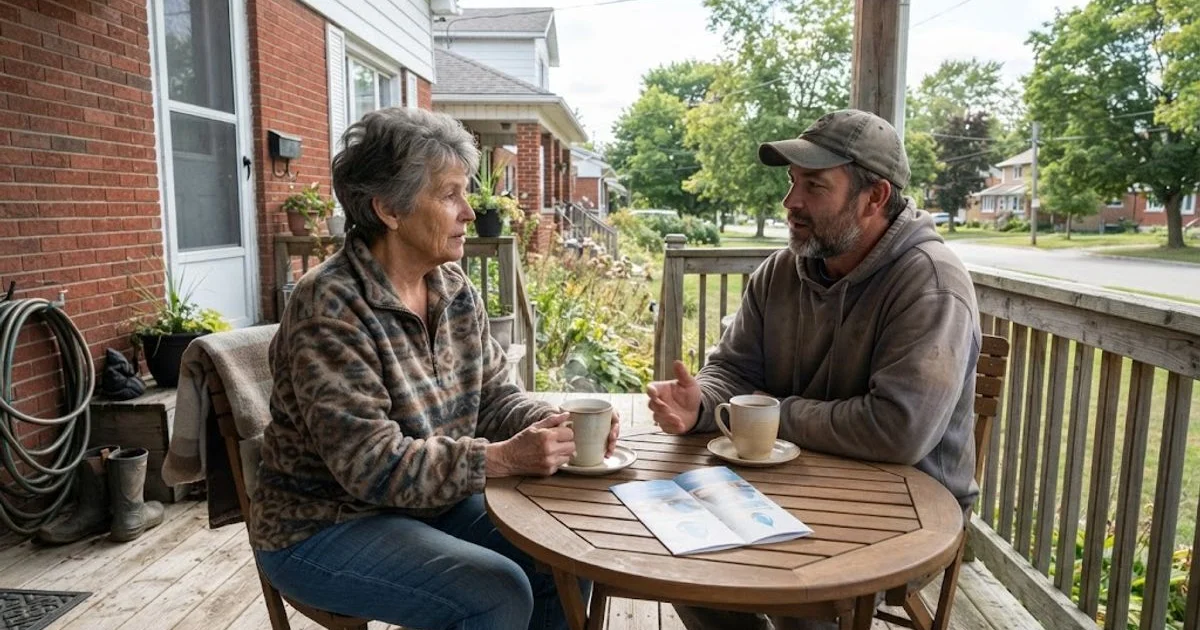
Few conversations feel as loaded as telling someone you love that their home has become a problem. It touches shame, identity and control all at once, which is exactly why the way you approach it matters as much as what you actually say.
This guide offers general communication suggestions, not therapy or medical advice. If the relationship involves significant conflict or the person’s safety is at risk, a mental health professional or social worker can offer guidance specific to your situation.
Why the standard approach usually backfires
The instinct to point out the problem directly, “this has to change,” “I can’t keep coming here,” often triggers shame rather than reflection. For someone with hoarding disorder, the clutter is tied to real distress about letting go, not simple carelessness, so a conversation that treats it as a willpower problem tends to make the person defensive rather than open.
A more effective starting point is curiosity rather than correction. Asking how they are feeling about their space, rather than telling them what is wrong with it, opens a conversation instead of closing one down.
It also helps to check your own expectations before you start. Going in hoping for an immediate agreement to a full cleanup sets both of you up for disappointment. A more realistic goal for a first conversation is simply keeping the door open for a second one.
A few things that tend to help
Pick a calm moment, not a crisis. Bringing it up in the middle of an argument, or right after finding something upsetting, tends to escalate rather than resolve. A quiet, unrushed moment gives the conversation a better chance.
Lead with concern, not judgment. Naming specific worries, safety, health, isolation, lands differently than general criticism of the mess itself. Try to describe what you have noticed rather than how it makes you feel about them as a person.
Expect more than one conversation. This is rarely a one-and-done talk. Progress tends to happen gradually, over several conversations, not in a single breakthrough moment.
Let them keep some control. Whenever it is safe to do so, let the person set the pace and make decisions about their own belongings. Feeling steamrolled tends to produce resistance, even when the underlying goal is shared.
| Approach that tends to help | Approach that tends to backfire |
|---|---|
| Curiosity about their experience | Direct criticism of the mess |
| Calm, unrushed timing | Bringing it up mid-crisis or mid-argument |
| Framing around safety and care | Framing around embarrassment or inconvenience |
| Involving one or two trusted people | Group confrontation or ambush-style intervention |

When the situation is more urgent
If there is an immediate safety hazard, blocked exits, exposed wiring, structural risk, the calm-and-gradual approach may need to give way to faster action, even if it is uncomfortable. In those cases, safety has to come first, but it is still worth explaining your reasoning to the person rather than acting without any conversation at all, where circumstances allow it.
Even in an urgent situation, try to preserve as much of the person’s dignity and involvement as you can. Explaining what has to happen and why, rather than simply announcing a decision that has already been made, tends to leave the relationship in better shape once the immediate crisis has passed.
If professional help becomes part of the plan
At some point, bringing in outside support, whether that is a counsellor, a support group, or a compassionate cleanup provider experienced with these situations, may be the right next step. Framing this as an addition to your support, not a replacement for it or a punishment, tends to make the idea easier for a loved one to accept.
If your loved one is open to it, involving them directly in choosing who helps, rather than presenting a provider as a decision already made, can go a long way toward keeping them engaged in the process rather than feeling like something is being done to them.
For more on how providers in this directory approach sensitive, family-involved situations, see our methodology page, or browse the full directory when you are ready to look into practical options.
FAQ
- When is the right time to bring up hoarding with someone?
- There is rarely a perfect time, but a calm moment outside of a crisis, rather than in the middle of an argument or immediately after a safety incident, tends to lead to a more productive conversation.
- What if they get defensive or shut down?
- That is a common reaction and does not mean the conversation failed. Staying calm, not pushing further in that moment, and revisiting the topic later often works better than trying to resolve everything in one talk.
- Should I set an ultimatum if they refuse help?
- Ultimatums can sometimes be necessary in genuine safety emergencies, but as a general approach they tend to increase shame and resistance rather than encourage change. A gradual, ongoing conversation usually works better.
- Is it okay to involve other family members in the conversation?
- It can help, but too many people at once can feel like an intervention or an ambush, which often backfires. One or two trusted people, rather than the whole family at once, tends to feel less overwhelming.